Singapore OBC compliance
Outcome-based cleaning compliance, from evidence to signed report.
Turn daily evidence from your Singapore outcome-based cleaning contract into a monthly report you and your client can sign. See the score, review the supporting records, and agree where to improve.

The work
Outcome-based cleaning (OBC) contracts measure results, not just staffing. CleanLog brings the supporting records into a monthly scorecard for you and your client to review. Set up the contract rules, capture the evidence, check the score, and sign the report.
Outcome-based contracting
Your scorecard supports the payment review.
Outcome-based contracting pays cleaning contractors for measured results instead of headcount. The buyer defines the outcomes, weights them into a monthly scorecard, and ties payment to the score.
Singapore government service buyers have required outcome-based contracting for new cleaning tenders and quotations since May 2020, according to NEA's implementation notice. NEA publishes current OBC guidance and sample contract specifications. Each contract defines its own scorecard and payment mechanism.
Outside Singapore the same model is usually called performance-based contracting. The mechanics are the same. Capture evidence as the work happens so the monthly review starts with a record both sides can check.
What the contract asks of you
Outcomes, not headcount
The contract sets the standard each area must meet. How you staff it is your call, so the record has to show the result rather than the roster.
A weighted KPI scorecard
Each KPI carries a weight, and the weights roll into one monthly score. Typical KPIs cover inspection results, ad-hoc response times, and periodic works.
Payment tied to the score
The tender sets payment bands against the monthly score, with a minimum service floor. The buyer applies the band each month.
A joint review on an audit trail
Provider and buyer review the month together and sign the result. The 2026 guide expects the records behind each KPI to sit in an electronic system both sides can check.
NEA's guide is advisory. Your tender sets the actual KPIs, weights, and payment bands.
How CleanLog supports it
Four things buyers need to verify.
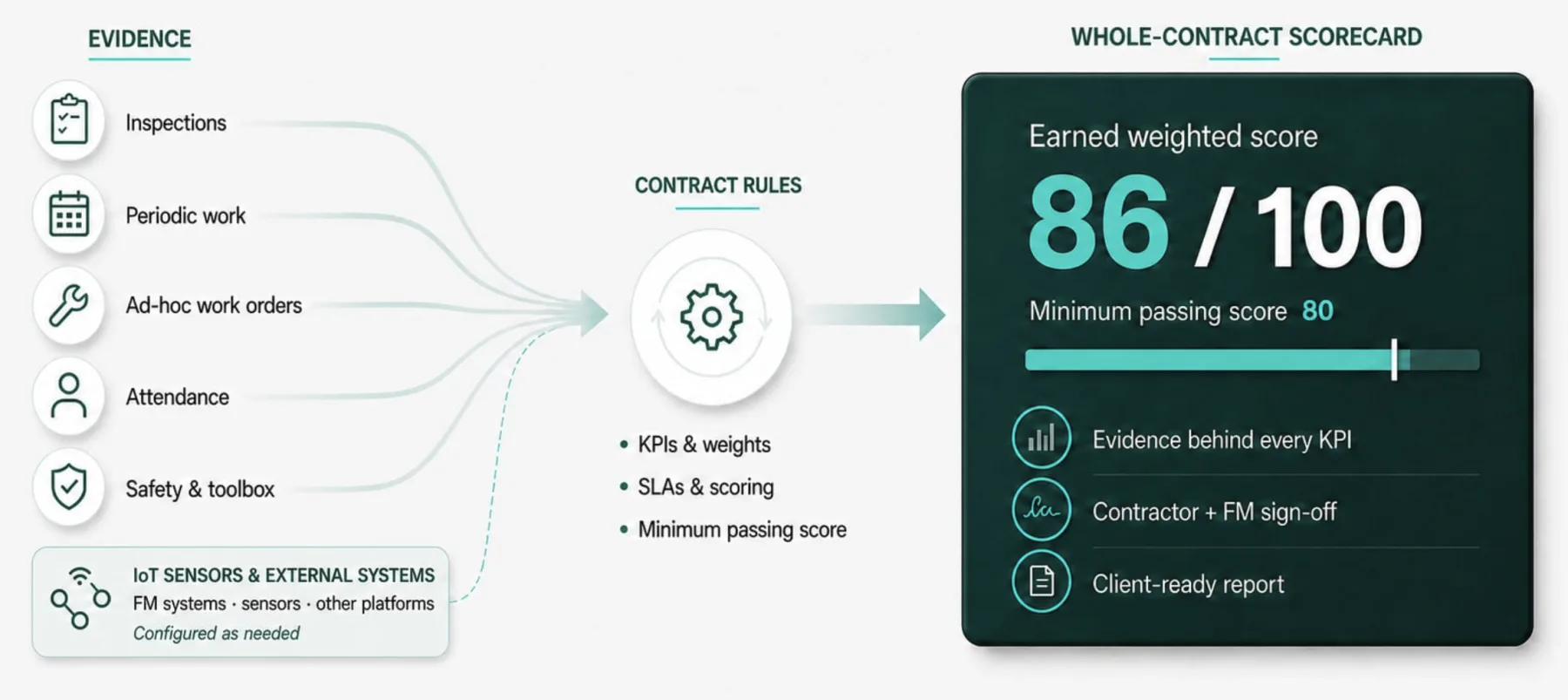
The exact clauses still belong to your tender. These four checks sit inside every outcome-based review, and CleanLog keeps the record for each one.
Service delivery and outcome evidence
Bring attendance, inspections, work orders, safety and toolbox records, and configured sensor or external-system data together against the contract.
A weighted monthly score
Calculate the score using your agreed KPI weights, with manually entered records clearly identified.
Provider and client sign-off
Keep signer roles, dates, and the reviewed report together.
A controlled correction trail
Keep the signed version and publish a new version when a correction is needed.
01 · Set up
Set up your contract scorecard.
List each key performance indicator (KPI), its target, scoring rule, weight, and supporting records. Agree how exceptions are handled and who signs the report.
Use the worksheet to list your tender's scoring rules and required evidence. We use those decisions to set up your scorecard. Pair it with the monthly cleaning audit checklist and scorecard guide to agree sampling, weights and periodic tasks. Use cleaning inspection software to record the checks behind your scorecard. Choose the checks behind the inspection score from the cleaning inspection checklist library.
Based on the performance measurement system and Template 4 in NEA's 2026 Guide on Specifications for Outcome-based Cleaning Contracts. Your tender remains the source of truth.
Configuration worksheet · PDF
Plan your scorecard setup.
Fill in the worksheet using your tender. Bring it to the OBC review so we can check the scoring rules with you.
Use it with your tender before configuring the report.
02 · Capture
Capture evidence on site.
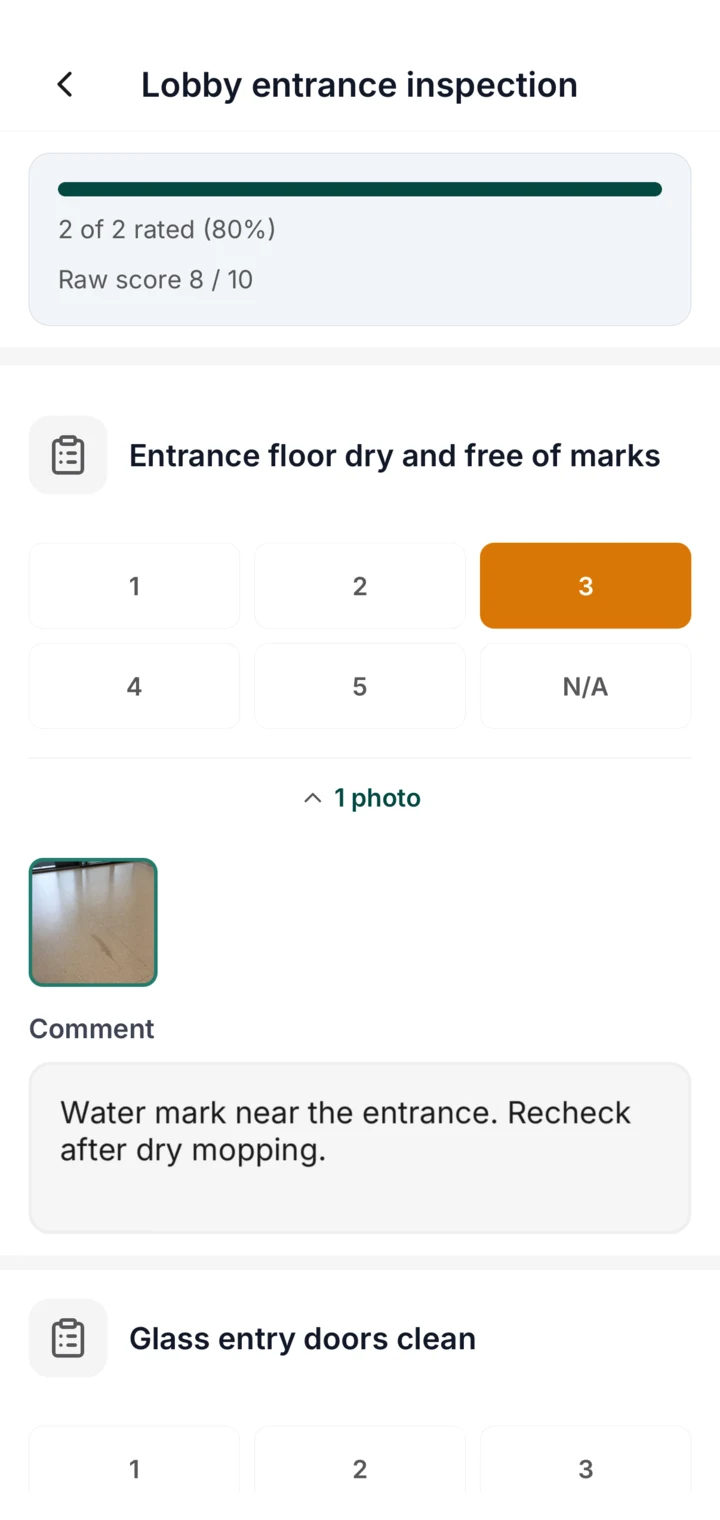
Evidence is recorded on mobile as the work happens. The score, photo, and note stay together.
- Inspections
- Score each item on mobile. The photo and the follow-up note stay with the score.
- Work orders
- Track each request against its agreed service deadline, from report to completion.
- Other records
- Record safety incidents, toolbox sessions, customer feedback, and disturbances as they happen.
03 · Calculate
Review the monthly score.
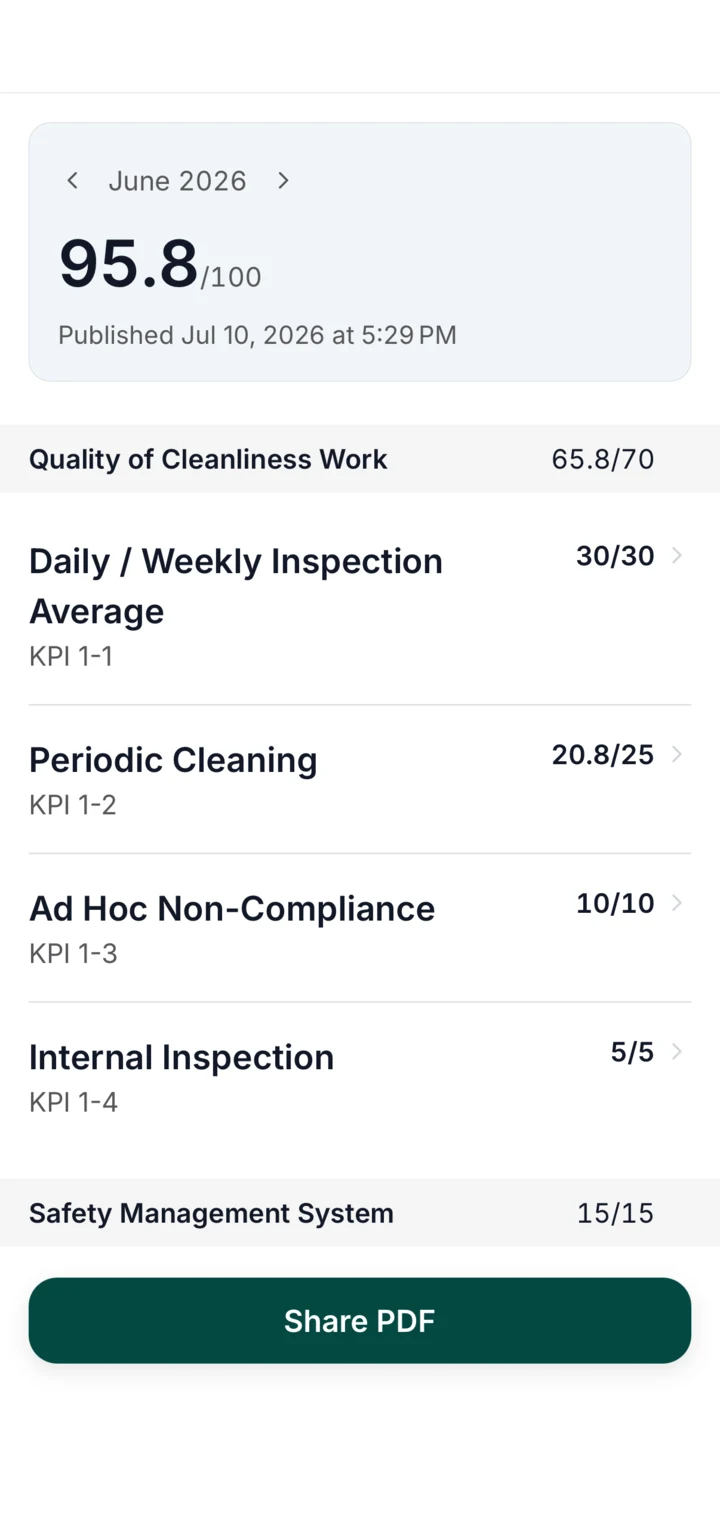
CleanLog combines the KPI results using your agreed weights. Both sides review the same numbers before signing.
- Weights
- Each KPI carries the weight agreed in the tender. CleanLog calculates the weighted score from the month's records.
- Manual records
- Clearly identify manually entered records used in the score.
- Joint review
- Provider and buyer review the same breakdown before anyone signs.
04 · Share
Share the finished report.
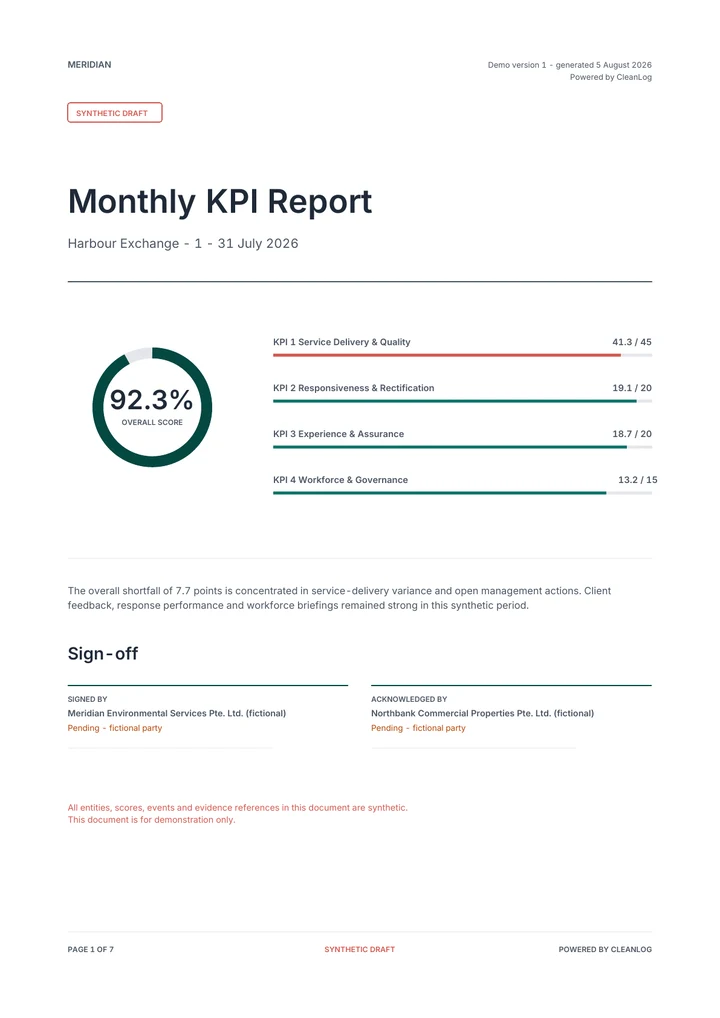
Share the monthly result as a PDF. Keep the signed version and the evidence behind it.
- Signers
- The configured provider and client signers review the scorecard with its evidence attached.
- Signed version
- The first signature locks that version of the report.
- Corrections
- Publish a new version to make a correction. The signed version stays unchanged.
Questions
Outcome-based cleaning in Singapore, answered.
What is the electronic audit system in OBC tenders?
How does CleanLog produce the OBC scorecard?
Who signs the report?
How does the client receive the report?
What happens to a KPI we did not measure in a month?
How is OBC Compliance priced?
Bring a signed track record to your next tender.
Each completed, co-signed monthly report adds a scorecard to your contract history.